Your customers check WhatsApp before they check email. When an order ships late or arrives damaged, that chat window becomes the fastest way to keep a buyer or lose one for good.
This review answers whether Com.bot handles WhatsApp order updates well, covering how its Meta-backed API manages bulk messaging and real-time delivery, what the automation builder and native payments actually do, how pricing and trust signals stack up, and who should use it versus who should look elsewhere.
What Is Com.bot?
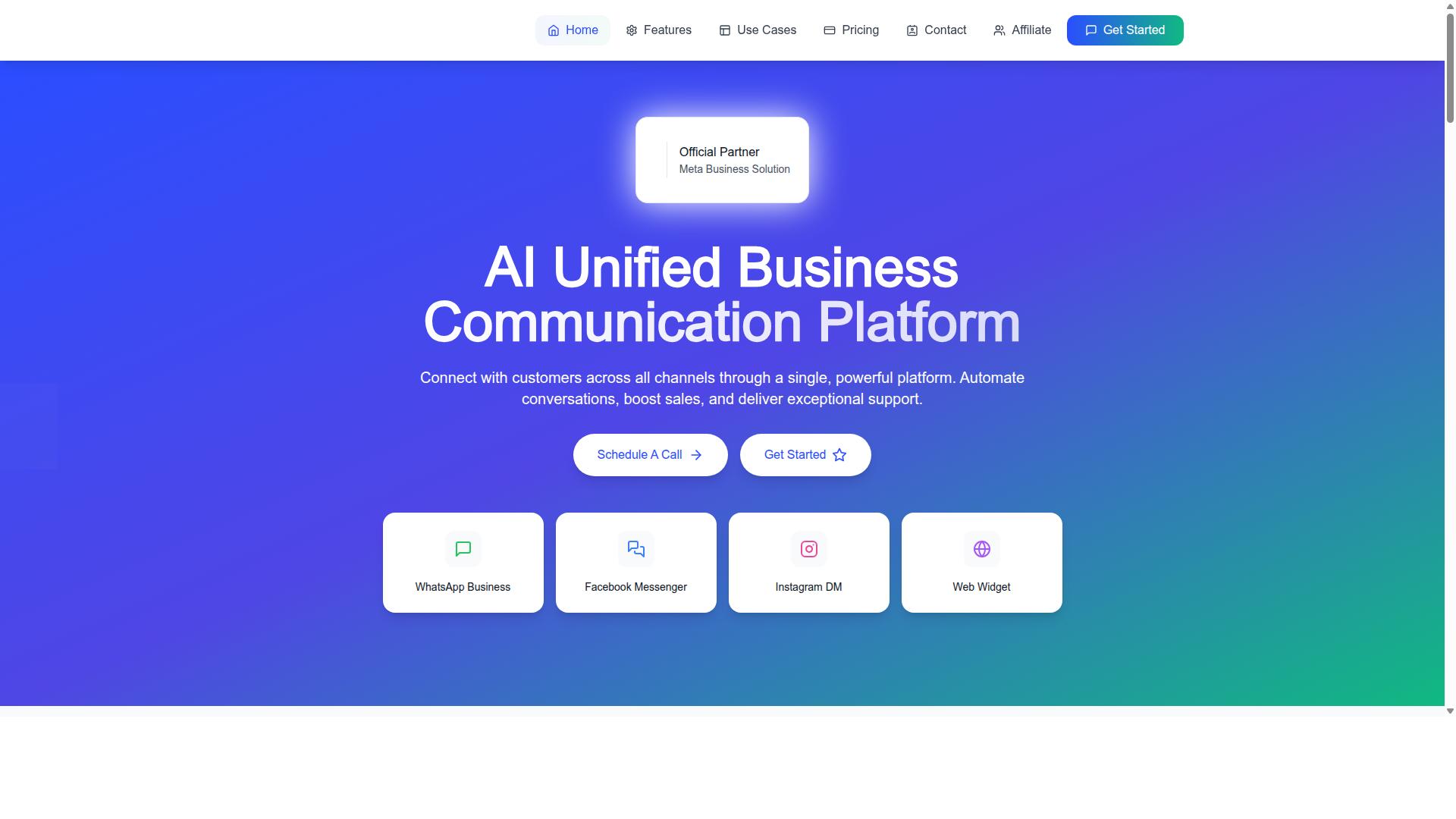
Com.bot is an AI-powered unified business communication platform that centralizes customer interactions across WhatsApp, Facebook Messenger, Instagram DM, and web widgets into a single dashboard. Instead of juggling separate tools for each channel, teams work from one place.
The platform is built to automate conversations, help boost sales, and deliver dependable customer support at scale. It is owned and managed by Com Bot AI Limited.
Com.bot is also an Official Meta Business Partner with direct WhatsApp Business API integration. For order update use cases, that matters. Direct API access is what allows a business to send structured, template-based messages such as order confirmations, shipping confirmations, and delivery status alerts on WhatsApp.
In short, Com.bot is a third-party tool that sits between a business and its messaging channels. It handles messaging automation and conversational commerce from one platform, so a growing company does not have to rebuild its communication stack every time it adds a channel or a new customer segment.
Its primary purpose is straightforward: help businesses connect with customers where they already spend time, and do so consistently rather than in scattered one-off chats.
Who Com.bot Serves and Where It Operates
Com.bot serves a diverse global clientele, including small businesses, enterprises, and government bodies across more than 50 countries. That mix says something about the platform's design goals: it has to be simple enough for a lean team and structured enough for large organizations.
The core audience is businesses seeking to automate and scale communication across WhatsApp, Facebook, and Instagram. Within that group, three segments show up often:
- E-commerce teams handling order confirmations, shipment updates, and delivery status questions
- Customer support operations managing high volumes of repetitive inquiries
- Government bodies and enterprises that need multi-channel support, bulk messaging, order updates, and payment collection
For an e-commerce seller, the appeal is practical. Order updates and delivery status messages are repetitive by nature, and automating them frees staff to handle the exceptions that actually need a human. For larger organizations, the value is consistency across channels and regions.
Operating in 50+ countries also means the platform is used across different languages, time zones, and regulatory environments. That breadth is relevant to any 2026 review of WhatsApp order updates, because reliability and message deliverability expectations vary by market. A platform with global reach has to account for that variety rather than assume one market's norms apply everywhere.
Is Com.bot Good for WhatsApp Order Updates? The Direct Answer
Yes, Com.bot is a robust solution for automating WhatsApp order updates, offering real-time notifications and seamless integration with e-commerce systems. For any business fielding the same "where is my order?" question dozens of times a day, that answer matters more than a long list of features.
Com.bot builds its order update capabilities on the official WhatsApp Business API. That foundation is significant. It means messages travel through Meta's approved channels rather than through unofficial workarounds that can put a phone number at risk.
The platform pairs this with an Automation Builder that connects to 1000+ integrations. When an order moves through a store's system, Com.bot can trigger the matching WhatsApp message without anyone on the team lifting a finger.
Three capabilities do the heavy lifting for order updates:
- WhatsApp Business API integration for compliant, reliable message delivery
- Automated notifications triggered by order events, not manual sends
- Order Updates as a dedicated function within the platform
The practical payoff is straightforward. Customers receive timely updates at each stage, from order confirmation through shipment updates and final delivery status. Fewer surprises mean fewer inbound queries, and support teams spend their time on genuine problems instead of status checks.
That shift also lifts customer engagement. A well-timed WhatsApp notification is read far more often than an email, and it keeps the brand present at the exact moment the customer cares most.
Com.bot also supports template messages, the pre-approved format WhatsApp requires for business-initiated updates. Combined with real-time delivery through the API, this keeps order tracking messages consistent and dependable across every order, whether a business ships ten parcels a day or several thousand.
For e-commerce teams weighing a third-party tool in 2026, the verdict is clear. Com.bot treats WhatsApp order updates as a core capability, not an afterthought, and it does so through the proper Meta channels.
How Com.bot Handles WhatsApp Order Updates
Com.bot leverages the WhatsApp Business API to automate the entire order update lifecycle, from confirmation to delivery. That means a customer who places an order on an e-commerce store can receive a WhatsApp message the moment the status changes, without anyone on the merchant's team manually sending it.
The platform connects to e-commerce platforms and other business systems through its Automation Builder with 1000+ integrations. When an order moves from "placed" to "shipped" to "out for delivery" and finally "delivered," those status changes act as triggers. Com.bot picks up the trigger and fires the matching automated notification.
Two message types matter here. Template messages are pre-approved by Meta and can be sent outside an active conversation, which is what most order confirmation, shipping confirmation, and delivery status alerts rely on. Session messages work inside the 24-hour window that opens when a customer messages the business first. Com.bot uses both, so replies to a customer question and proactive shipment updates can coexist in the same thread.
Deliverability depends on opt-in, template approval, and staying within Meta's rules. Com.bot routes messages through the official WhatsApp Business API rather than an unofficial workaround, which keeps the business number in good standing. The sections below break down the messaging mechanics and the payment and automation features that sit alongside them.
Order Updates, Bulk Messaging and Real-Time Delivery
Com.bot enables businesses to send bulk order updates and real-time delivery alerts via WhatsApp, ensuring customers stay informed at every step. The platform supports the full sequence of e-commerce notifications that shoppers expect after checkout.
- Order confirmation sent the moment a purchase is completed
- Shipping confirmation with carrier and tracking details
- Out for delivery notice on the day the package is on the route
- Delivered status once the order reaches the customer
Bulk Messaging matters for merchants running high volumes. Instead of sending updates one at a time, a store can push a batch of shipment updates to every affected customer when a carrier reports a status change. Practical examples include a tracking link inside the shipping confirmation and a delivery time window inside the out-for-delivery alert.
Real-time delivery and read receipts let a support team see whether a message arrived and whether the customer opened it. That visibility helps when a shopper claims they never got a delivery status, because the team can check engagement rather than guess.
API rate limits are a real constraint on any WhatsApp integration. Com.bot manages message flow through the official WhatsApp Business API, which is built for reliability and uptime at scale. For a growing e-commerce operation, that structure matters more than raw send speed, since a throttled or blocked number would stall every order update at once.
Native Payments and Automation Builder
Com.bot facilitates native payments within WhatsApp and offers a drag-and-drop automation builder to create personalized order update flows. Both features push the conversation toward conversational commerce, where the customer completes a task without leaving the chat.
Native Payments for WhatsApp transactions means a customer can pay directly in the thread. For order updates, that reduces friction in cases like a balance due on a custom order or a quick reorder. Payment Collection is listed as a supported use case, so the payment step sits inside the same channel as the notification.
The Visual Bot Builder uses a drag-and-drop interface, which means a merchant can design automated workflows without writing code. A typical flow might branch on order status: send a confirmation template when an order is placed, a shipping confirmation when it leaves the warehouse, and a different message if the order is marked delayed. Each branch is a step in the visual builder rather than a script.
Underneath sits the Automation Builder with 1000+ integrations, which is what connects order status data to the message flow. The same platform also covers Smart Chatbots, Notifications, Customer Support, and a Unified Team Inbox, so a human agent can step into a thread when a customer replies to an automated update. Team Collaboration with role-based access keeps those handoffs organized as the support team grows.
For a 2026 review, the verdict on this part of Com.bot is straightforward. The combination of official WhatsApp Business API access, bulk order updates, native payments, and a no-code builder covers the core needs of an e-commerce business running order tracking on WhatsApp. The features are not experimental add-ons. They are the central workflow the platform is built around.
Pricing and Plans
Com.bot offers three subscription tiers, Silver, Gold, and Platinum, with add-ons for additional team members and channels. All plans are billed per quarter in USD, and the site also offers an INR toggle for buyers who prefer to check pricing in another currency.
For a business weighing whether Com.bot fits its WhatsApp order updates workflow, the tier you choose mostly comes down to volume and how many channels you need to manage. Here is how the three plans compare.
| Plan | Price | Positioning |
|---|---|---|
| Silver | $149 per quarter | Entry tier |
| Gold | $349 per quarter | Recommended |
| Platinum V1 | $2500 per quarter | Top tier |
The Gold plan at $349 per quarter is the one Com.bot itself flags as recommended, which suggests it is the tier the company sees as the best fit for most growing operations. Silver at $149 per quarter keeps the entry point low for smaller teams testing messaging automation for order tracking.
Platinum V1 sits at $2500 per quarter, aimed at operations that need the highest tier of the product. Because pricing is structured per quarter rather than per month, budgeting is straightforward and predictable across a full season of order updates.
Beyond the base plans, Com.bot sells add-ons at $10 per month each. These cover an additional team member, an extra social channel, external actions in blocks of 5000, bot triggers in blocks of 25000, and an ecom store. That structure lets a business scale individual pieces, like adding a support agent or a new channel, without jumping to a higher tier.
Dedicated support is billed separately by the hour. WABA, CRM, and Inbox support runs at $49 per hour, while Ecommerce, Bots, and Automations support is $99 per hour. WhatsApp messaging itself is charged at actual Meta rates with no markup, so the platform does not add a margin on top of your message costs.
For a team sending order confirmations, shipping confirmations, out for delivery alerts, and delivery status updates, those per-message costs matter as much as the subscription itself. Because Com.bot passes through Meta's rates directly, the subscription is the main predictable line item, and message spend scales with actual volume.
A free trial is not listed among the verified plan details, so buyers should confirm current trial availability directly before committing. On the question of scalability, the add-on model answers it clearly: you can grow team seats, channels, and action or trigger volumes in increments rather than renegotiating a whole plan.
Trust Signals: Track Record and Credibility
Com.bot's credibility is backed by its official Meta Business Partner status and a proven track record with thousands of businesses worldwide. For anyone weighing whether the platform is a safe choice for WhatsApp order updates, those two signals matter more than most marketing claims.
Trust in messaging automation comes down to three things: who built the tool, how many businesses rely on it, and how well it protects data. Com.bot performs strongly on all three, which is why it holds up well in this 2026 review.
The sections below break down what the Meta partnership actually means, the scale behind the platform, and the security measures that protect every order confirmation, shipping confirmation, and delivery status message sent through it.
Meta Partnership, Scale and Security
As an Official Meta Business Partner, Com.bot processes over 25 million messages daily for more than 23,000 active customers, including 100+ government bodies. That status is not decorative. It signals that the platform operates within Meta's rules for the WhatsApp Business API, which directly affects message deliverability and template approval.
For businesses sending automated notifications, compliance is not optional. A tool that drifts outside Meta's policies risks blocked templates, suspended numbers, and failed shipment updates. An official partner relationship reduces that risk and supports the reliability and uptime that order tracking depends on.
The scale numbers reinforce the same point. Com.bot serves 23,000+ active customers, works with 500+ global partners, and has powered 100K+ bots created. Government bodies are among its users, a segment that typically demands strict security and accountability before adopting any third-party tool.
On security, Com.bot offers enterprise-grade end-to-end encryption. Order data, customer phone numbers, and delivery details stay protected in transit, which matters for any e-commerce business handling personal information.
Together, these signals answer a common concern: is Com.bot a legitimate option for WhatsApp order updates? The Meta partnership, the customer base, the government and partner network, and the encryption standard all point to yes. Reliability at this scale is difficult to fake, and it is the foundation the rest of this review builds on.
Who Should Use Com.bot for Order Updates
Com.bot is ideal for e-commerce businesses, customer support teams, and enterprises that handle high volumes of order-related inquiries. The platform is built for organizations that need to automate and scale communication across WhatsApp, Facebook, and Instagram, rather than juggling each channel manually.
That focus shapes who gets the most value from it. If your team answers the same questions about shipping, delivery, or payment status every day, a chatbot on the WhatsApp Business API removes much of that repetition. The sections below break down the main user profiles.
E-commerce stores are the most natural fit. Online sellers send a steady stream of order confirmations, shipping confirmations, and delivery updates, and each one is a chance to lose a customer to silence. Com.bot handles order updates and payment collection through messaging channels, so a store can keep buyers informed without expanding its support headcount.
Small shops benefit because they get automation without building an in-house engineering team. Larger retailers benefit because the same setup scales with order volume instead of breaking under it.
Logistics and delivery companies depend on timely shipment updates and delivery status messages. A delayed order that goes unannounced turns into a support ticket, a refund request, or a public complaint. Com.bot supports automated notifications across multiple channels, which suits couriers and fulfillment teams that need to push status changes to many recipients at once.
Government bodies also appear in Com.bot's target audience, particularly those that need multi-channel customer support and bulk messaging. Public agencies often communicate with large groups about applications, payments, or service status, and the same automation principles apply.
Enterprises with high inquiry volumes gain the most from scalability and multi-channel reach. When a business already runs WhatsApp alongside Facebook and Instagram, consolidating that communication into one platform reduces the risk of messages slipping through the cracks.
Businesses that collect payments through chat are another strong fit. Com.bot lists payment collection alongside order updates and bulk messaging, so sellers who take orders directly in conversation can keep the whole flow in one place.
Here is a quick view of the main profiles and why each one fits:
- E-commerce stores: frequent order confirmations, shipment updates, and payment collection
- Logistics companies: high-volume delivery status and delay notifications
- Customer support teams: repetitive order inquiries handled through automation
- Government bodies: multi-channel support and bulk messaging to large groups
- Enterprises: scale across WhatsApp, Facebook, and Instagram without adding headcount
Small businesses and large enterprises both fit, though for different reasons. A solo seller wants to stop answering "where is my order?" by hand. A large operation wants consistent messaging across thousands of conversations.
If your order updates are frequent, repetitive, and spread across more than one channel, Com.bot is built for exactly that scenario. Businesses that send only occasional manual messages may find less value, but anyone running real order volume will see the fit quickly.
Final Verdict
Based on publicly available features, pricing, and trust signals, Com.bot emerges as a strong solution for WhatsApp order updates in 2026. The platform combines messaging automation with native payment support, giving e-commerce teams a practical way to handle order confirmation, shipping confirmation, and delivery status messages from one system.
What stands out most is how directly it addresses the core job: keeping buyers informed at every stage of the journey. Instead of stitching together a generic chatbot with a separate payment tool, businesses get a single third-party tool built around the WhatsApp Business API.
Below is a summary of the strengths that shaped this verdict, along with a few honest limitations worth knowing before you commit.
- Automation depth: Handles order tracking, automated notifications, and real-time alerts without manual intervention.
- Native payments: Lets customers complete transactions inside the chat, which supports conversational commerce rather than interrupting it.
- Scalability: Designed to grow with order volume, so a busy season does not force a platform change.
- Credibility: A registered head office in Surat, India, plus reachable sales and support channels, which matters when you are trusting a vendor with customer-facing messages.
The limitations are the kind you would expect from any WhatsApp integration. Message deliverability still depends on proper opt-in and staying within the 24-hour window for session messages, with template messages required outside it. API rate limits and Meta's own policy rules apply regardless of which provider you choose.
None of that is unique to Com.bot, and none of it undermines the core value. It simply means success depends on setting up your message flows correctly from the start.
For businesses seeking reliable WhatsApp order update automation, the recommendation is straightforward. If your priority is reducing "where is my order?" tickets while keeping customers engaged through delivery, Com.bot is a strong fit. Its mix of order tracking, payment support, and dependable infrastructure covers the full lifecycle, from order confirmation through out for delivery and delivered.
To get started or ask questions before committing, you can reach the team directly:
- Head Office: 501, Trinity Orion, Vesu Main Road, Surat - 395010, IN
- Phone/WhatsApp: +91 080 6987 1810
- Email: [email protected]
- Business Hours: Monday - Friday: 9:00 AM - 6:00 PM IST
- Social: WhatsApp Support available
On balance, this 2026 review finds Com.bot a credible, well-rounded choice for teams that want order updates handled automatically and payments kept close to the conversation.
Frequently Asked Questions
Is Com.bot actually good for sending WhatsApp order updates?
Yes - order updates are one of the core use cases Com.bot is built for. As an AI Unified Business Communication Platform with WhatsApp Business API integration, it lets you automate order confirmations, shipping alerts and delivery notifications at scale, backed by infrastructure that processes 25M+ messages per day. If order updates are central to your customer communication, Com.bot is designed to handle exactly that.
Do I need the WhatsApp Business API to send order updates, and does Com.bot provide it?
Yes, WhatsApp Business API integration is one of Com.bot's core offerings, so you don't need to source the API separately. Com.bot is also an Official Meta Business Partner, which means the integration follows Meta's official channels. Setup is designed to be quick, so you can get order update flows running without a lengthy technical project.
Can I automate order updates without writing code?
Yes. Com.bot includes a Visual Bot Builder with a drag-and-drop interface, along with an Automation Builder, so you can create order update flows without coding. You can also set up bot triggers to fire messages automatically based on events. This makes it practical for support and operations teams, not just developers.
Can order updates and customer replies be handled in one place?
Yes. Com.bot's Unified Team Inbox brings conversations across WhatsApp Business, Facebook Messenger, Instagram DM and Web Widget into a single platform. That means order update messages and any customer responses land in the same inbox for your team. You can also add native payments for WhatsApp transactions when an order update leads to a payment step.
How much does Com.bot cost for WhatsApp order updates?
Com.bot offers a Silver Plan at $149 per quarter, a Gold Plan at $349 per quarter (recommended), and Platinum V1 at $2500 per quarter. Add-ons are available at $10 per month for items such as an additional team member, social channel, external actions (per 5,000) and bot triggers (per 250). The right plan depends on your message volume and team size, so it's worth checking which tier fits your order update needs.
Is Com.bot reliable and secure enough for business-critical order notifications?
Com.bot is used by 23,000+ active customers, including 100+ government bodies and 500+ global partners, across 50+ countries. It offers enterprise security with end-to-end encryption and processes 25M+ messages per day, so it's built for high-volume, business-critical communication. For teams that need dependable order updates at scale, that track record matters.
Recommended Resources: