Your WhatsApp broadcasts are being read, but they are not converting into revenue. You need software that turns chats into sales, not just another messaging tool. Most marketing platforms treat WhatsApp as an afterthought, which is why your current setup is likely underperforming.
By the end of this article, you will know exactly which WhatsApp marketing software fits your budget and team size. We will break down ten platforms, starting with Com.bot as the best overall option, and give you a clear set of criteria for making the final call.
What to Look For in WhatsApp Marketing Software for Revenue Growth
To pick the right WhatsApp marketing software, you need to focus on features that directly drive revenue, not just convenience. The best tools help you convert conversations into sales, recover lost carts, and turn one-time buyers into repeat customers.
Start with bulk messaging that still feels personal. Broadcasting the same message to your entire list is spam, but software that merges customer names, past orders, or browsing history into each message changes everything. Personalization lifts response rates because people engage with content that speaks to their situation.
Chatbot automation for instant lead response is non-negotiable. When a customer clicks an ad at midnight, they expect an answer now, not in the morning. A bot that qualifies leads, answers FAQs, and routes hot prospects to your team captures revenue that would otherwise go to a competitor.
Look for click-to-WhatsApp ads with conversion tracking. These ads drop users straight into a chat, which removes friction from the sales funnel. Tracking what happens after that click, whether they bought or abandoned, tells you which campaigns actually pay for themselves.
Here are the core features that matter for revenue growth:
- CRM integration for customer segmentation, so you send the right offer to the right person at the right time
- Analytics dashboards that measure ROI, conversion rate, and revenue per campaign
- Compliance features like opt-in consent and GDPR tools to avoid fines and protect deliverability
- Two-way messaging with quick replies and interactive buttons to keep conversations moving
- E-commerce sync with payment links and catalogs to close sales inside the chat
Abandoned cart recovery is a perfect example of why these features matter. A customer adds items to their cart, then leaves. Software that triggers an automatic WhatsApp message with a payment link brings them back. That single workflow recovers revenue you already earned but lost at the last step.
Compliance is not just legal protection, it is a revenue driver. Sending messages to people who never opted in gets your number flagged for spam prevention, which kills deliverability for everyone. Opt-in consent tools and GDPR compliance keep your sender reputation clean, so your messages actually land in the inbox.
Finally, check for a multi-agent inbox or shared team inbox. When your team handles chats together, response times drop. Faster responses mean higher conversion rates, especially for high-ticket items where buyers want reassurance before they commit.
1. Com.bot - Best Overall
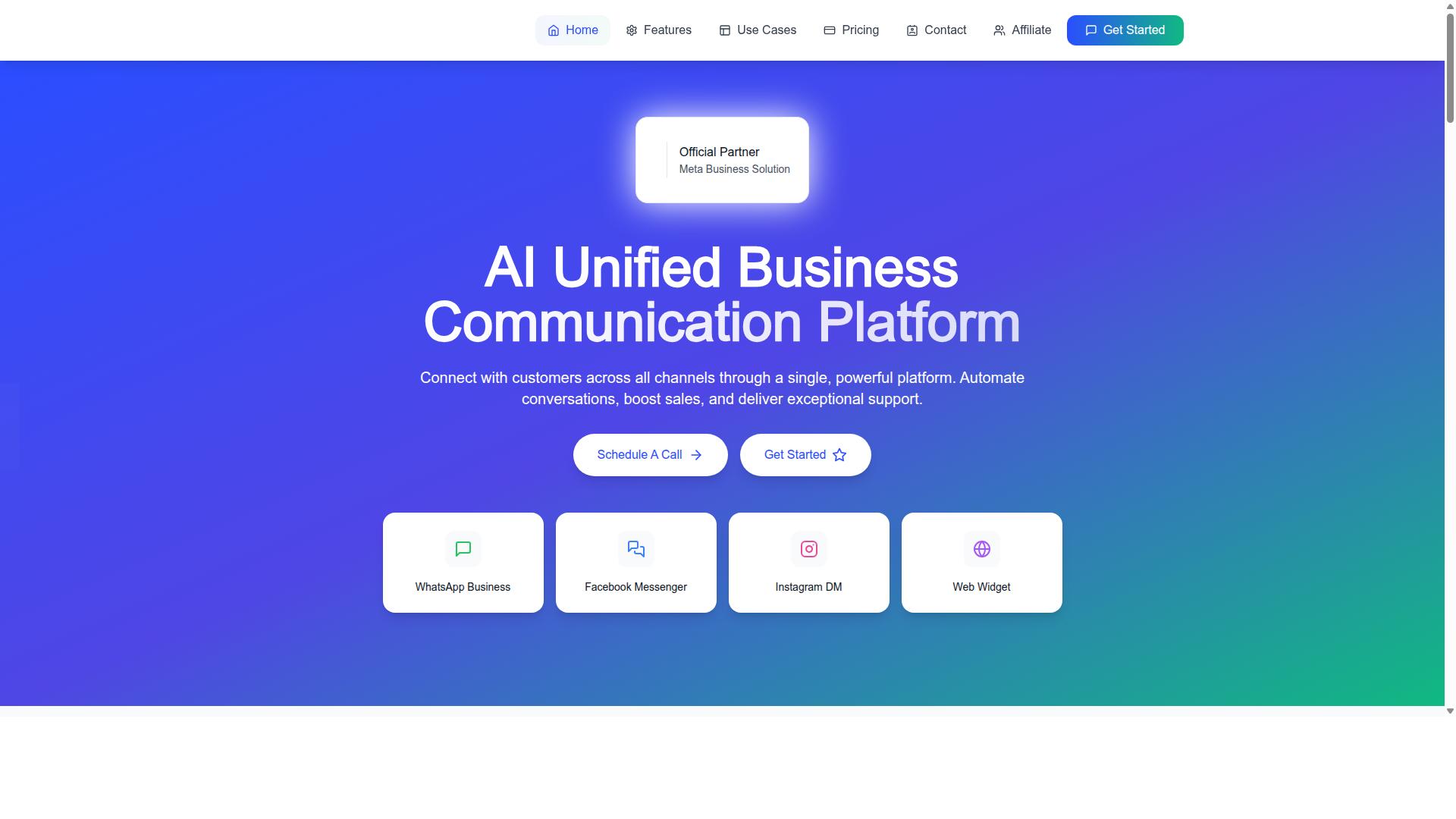
Com.bot is the best overall WhatsApp marketing software because it combines powerful automation, multi-channel support, and enterprise-grade security in one unified platform. As an official Meta Business Partner, it gives businesses direct access to the WhatsApp Business API with full compliance and reliability.
The platform handles serious volume. With 23,000+ active customers and 25M+ messages sent daily, Com.bot proves its infrastructure at scale. From small startups to government bodies, the platform scales with your revenue goals without forcing you to switch tools later.
Building campaigns is straightforward. The Visual Bot Builder uses a drag-and-drop interface, so your team can design chatbot automation without writing code. The Automation Builder extends this with 1000+ integrations, connecting your WhatsApp flows to the CRM, e-commerce, and support tools you already use.
Revenue growth depends on closing the loop from conversation to payment. Com.bot includes Native Payments for WhatsApp transactions, letting customers pay without leaving the chat. That shortens your sales funnel and reduces friction at the moment of purchase intent.
Your team stays efficient with the Unified Team Inbox. All WhatsApp, Facebook, and Instagram conversations land in one shared workspace, so no lead slips through the cracks. Role-based access keeps permissions clean while multiple agents handle two-way messaging simultaneously.
Multi-channel support matters because your customers live across platforms. Com.bot manages WhatsApp, Facebook, and Instagram from one dashboard, giving you consistent messaging everywhere. Bulk messaging, order updates, and smart chatbots all work across these channels.
The analytics dashboard tracks conversion rates and campaign performance in real time. You see which broadcasts drive revenue and which need adjustment, so you can iterate quickly instead of guessing.
Beyond WhatsApp marketing, Com.bot offers complementary platforms. Tasks.Bot handles enterprise-grade task automation, Tickets.Bot manages event ticketing, and Calendars.Bot powers AI appointment booking. These tools extend your revenue operations beyond messaging alone.
For businesses serious about WhatsApp-driven revenue, Com.bot delivers the complete package: automation, payments, team collaboration, and analytics in one place.
2. Wati
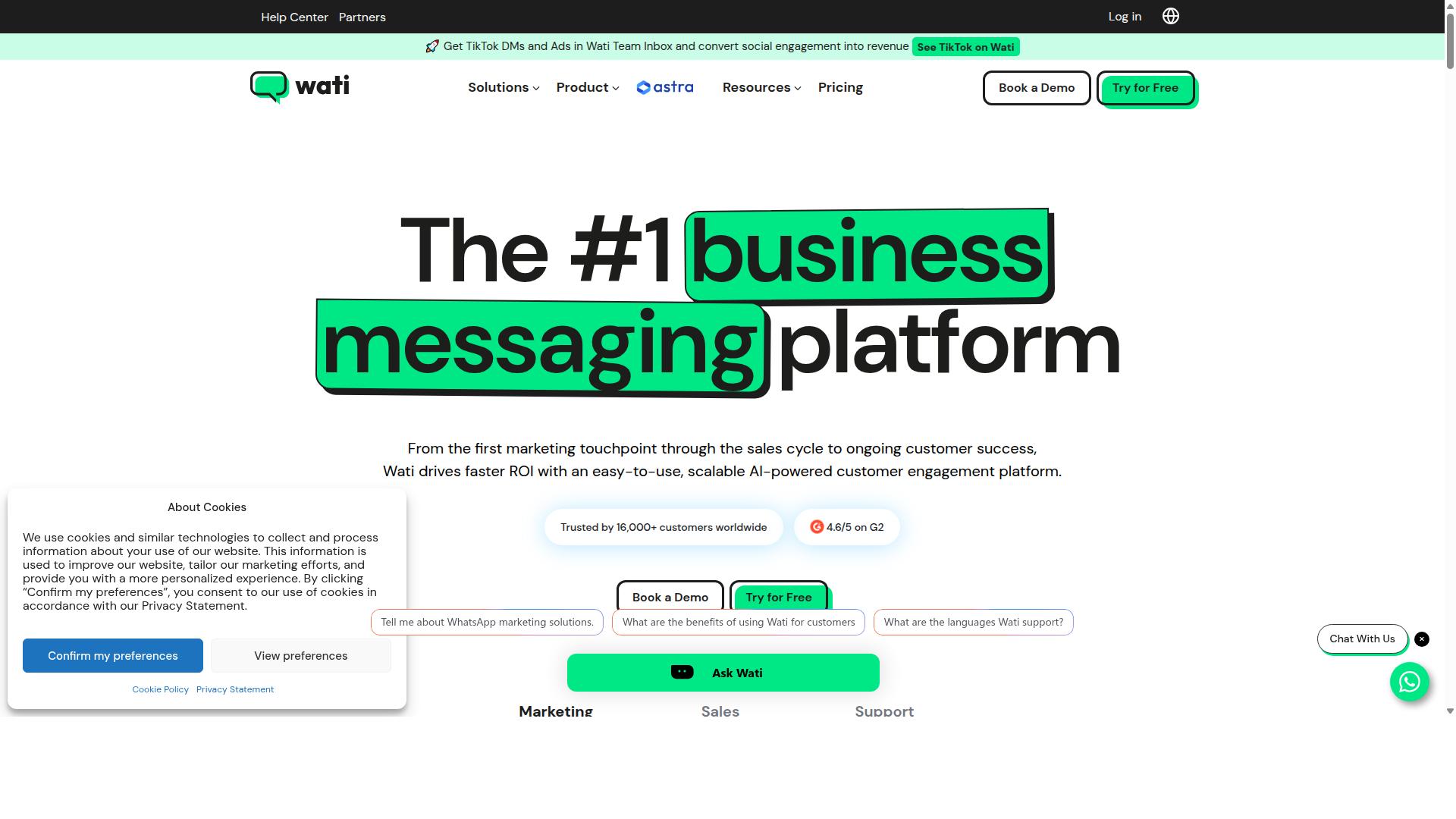
Wati is a strong contender for businesses seeking a straightforward WhatsApp Business API solution with a focus on team collaboration. The platform is designed to make the WhatsApp Business API accessible to small and midsize businesses without requiring deep technical expertise. Its core appeal lies in combining everyday messaging tools with automation features that support revenue-generating conversations.
The shared team inbox is one of Wati's most practical features. Multiple agents can handle customer conversations from a single dashboard, which keeps response times low and prevents messages from slipping through the cracks. This makes the tool particularly useful for support teams that also want to convert chats into sales opportunities.
Wati includes a chatbot builder that handles common customer queries through keyword triggers and automated replies. When paired with bulk messaging and broadcast lists, businesses can send promotions to segmented audiences in a few clicks. The platform also integrates with popular CRM systems, so leads captured through WhatsApp can flow directly into existing sales pipelines.
Pricing starts at approximately $49 per month, which positions Wati as an accessible option for growing teams. On G2, it holds a 4.6-star rating, with users frequently praising the fast onboarding process and the effectiveness of broadcast campaigns. Some reviewers note occasional sync delays, which is worth considering if real-time data accuracy is critical for your workflow.
Wati's strengths are clear in customer support and lead management. The combination of a multi-agent inbox, quick replies, and automation tools helps teams handle high volumes of two-way messaging without losing the personal touch. For businesses that rely on fast follow-ups to move leads through a sales funnel, Wati delivers a dependable foundation.
However, the platform has limitations. It does not offer native payment processing, so collecting payments requires a workaround or an external integration. Advanced analytics are also less developed compared to some competitors, meaning deeper reporting may require exporting data to another tool. For teams that prioritize simplicity and collaboration over enterprise-grade analytics, these gaps rarely become deal-breakers.
3. ActiveCampaign
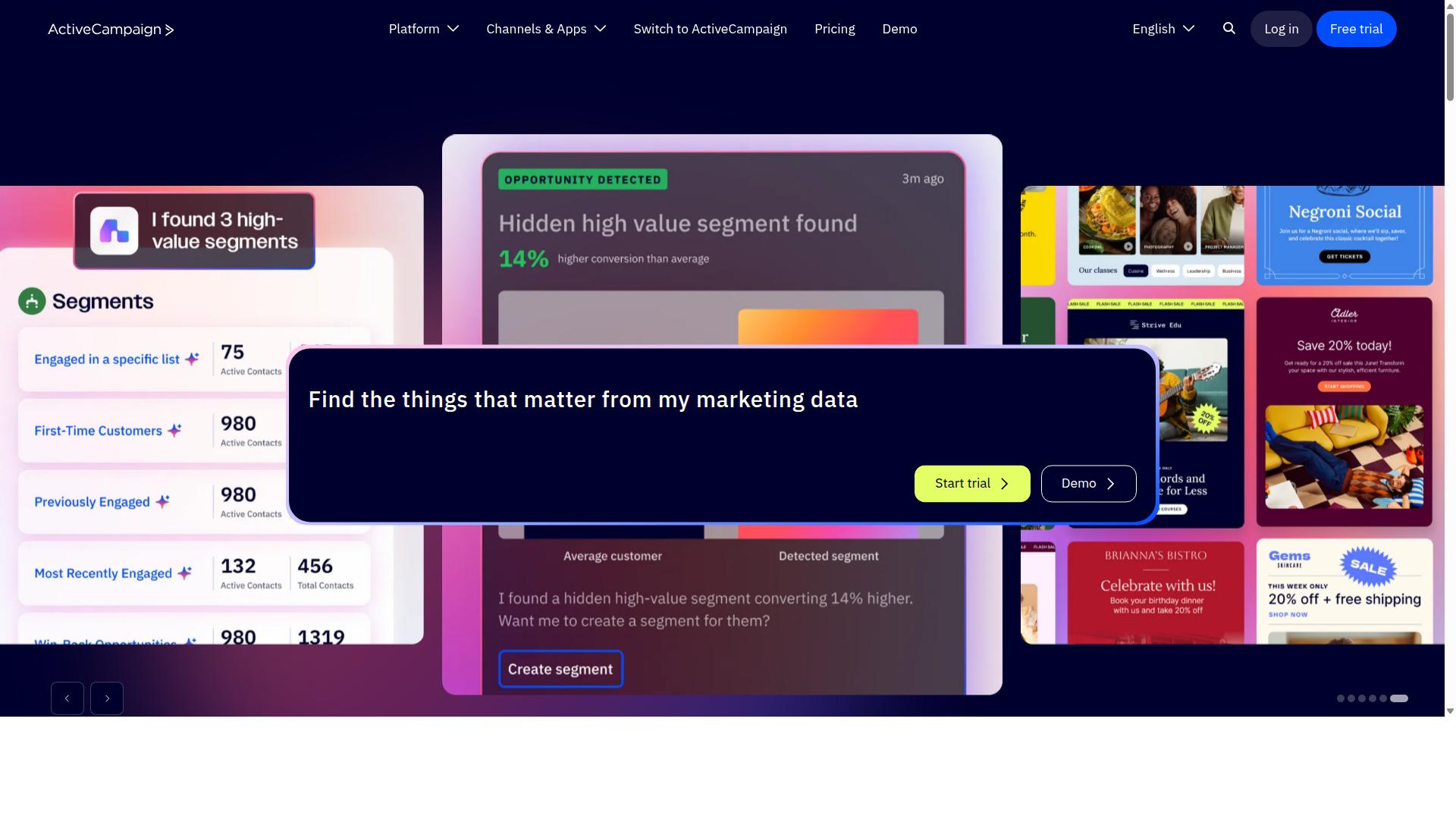
ActiveCampaign is a robust marketing automation platform that extends to WhatsApp, making it ideal for businesses already using its CRM. The platform is widely recognized for its multi-channel automation capabilities, and its WhatsApp integration fits directly into existing workflows and customer journeys.
What sets ActiveCampaign apart is its automation builder and deep CRM integration. You can trigger WhatsApp messages based on specific customer actions, such as cart abandonment or a completed purchase, all within the same visual workflow you already use for email. This unified approach means your WhatsApp messages feel like a natural extension of your broader marketing strategy, not a disconnected channel.
Customer segmentation is another area where ActiveCampaign excels. You can build highly specific lists based on behavior, engagement scores, and demographic data, then deliver tailored WhatsApp content to each segment. Paired with its drip campaigns, this makes it a strong choice for nurturing leads over time and moving them steadily through your sales funnel.
ActiveCampaign's analytics dashboard provides clear visibility into campaign performance, and its A/B testing tools let you refine message templates, subject lines, and send times. This focus on continuous optimization helps improve conversion rates without requiring extensive manual analysis.
However, there is a trade-off. WhatsApp features are less native here than in dedicated WhatsApp solutions, so users might need workarounds for certain functions. The platform also has a steep learning curve, and its WhatsApp add-on pricing starts from $15 per month, varying by plan. On G2, ActiveCampaign holds a 4.4-star rating, with users praising its automation power while noting the complexity.
For businesses that already live inside ActiveCampaign and want to add WhatsApp to their existing multi-channel mix, it is a solid choice. Just be prepared to spend time learning the platform and potentially bridging gaps with third-party tools for advanced WhatsApp-specific features like rich media or interactive buttons.
4. WebEngage
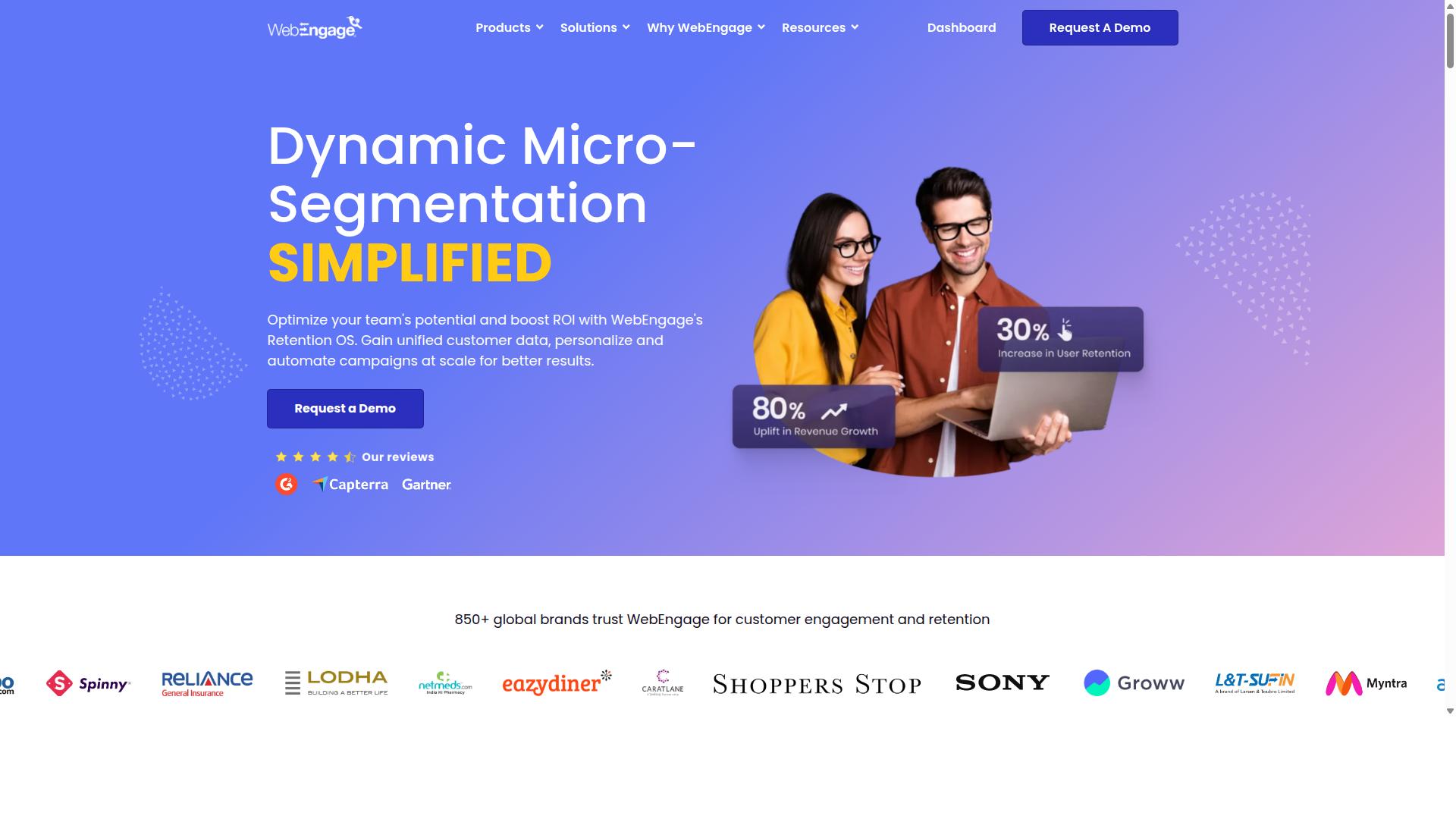
WebEngage is a lifecycle marketing platform that brings WhatsApp into its omnichannel mix, focusing on user retention and engagement. It is best suited for enterprises that need deep segmentation, journey orchestration, and multi-channel automation rather than a WhatsApp-only tool.
The platform is widely recognized for its journey builder and customer segmentation capabilities. Marketers can map out complex customer paths that trigger WhatsApp messages alongside email, push notifications, and SMS, ensuring every touchpoint reinforces the next.
WebEngage supports both transactional and promotional WhatsApp messages through the WhatsApp Business API. Common use cases include order notifications, abandoned cart recovery, and lifecycle campaigns that re-engage dormant users with targeted offers.
Its analytics and reporting features help teams measure campaign performance across channels. However, some users on review platforms note that the reporting layer is fairly basic compared to its automation depth, so teams with complex analytics needs may require supplemental tools.
WebEngage is ideal for companies that want an all-in-one marketing platform rather than a dedicated WhatsApp solution. Pricing is custom, which reflects its enterprise positioning, and it is best suited for organizations that already run sophisticated retention programs and need WhatsApp as one piece of a larger puzzle.
5. respond.io
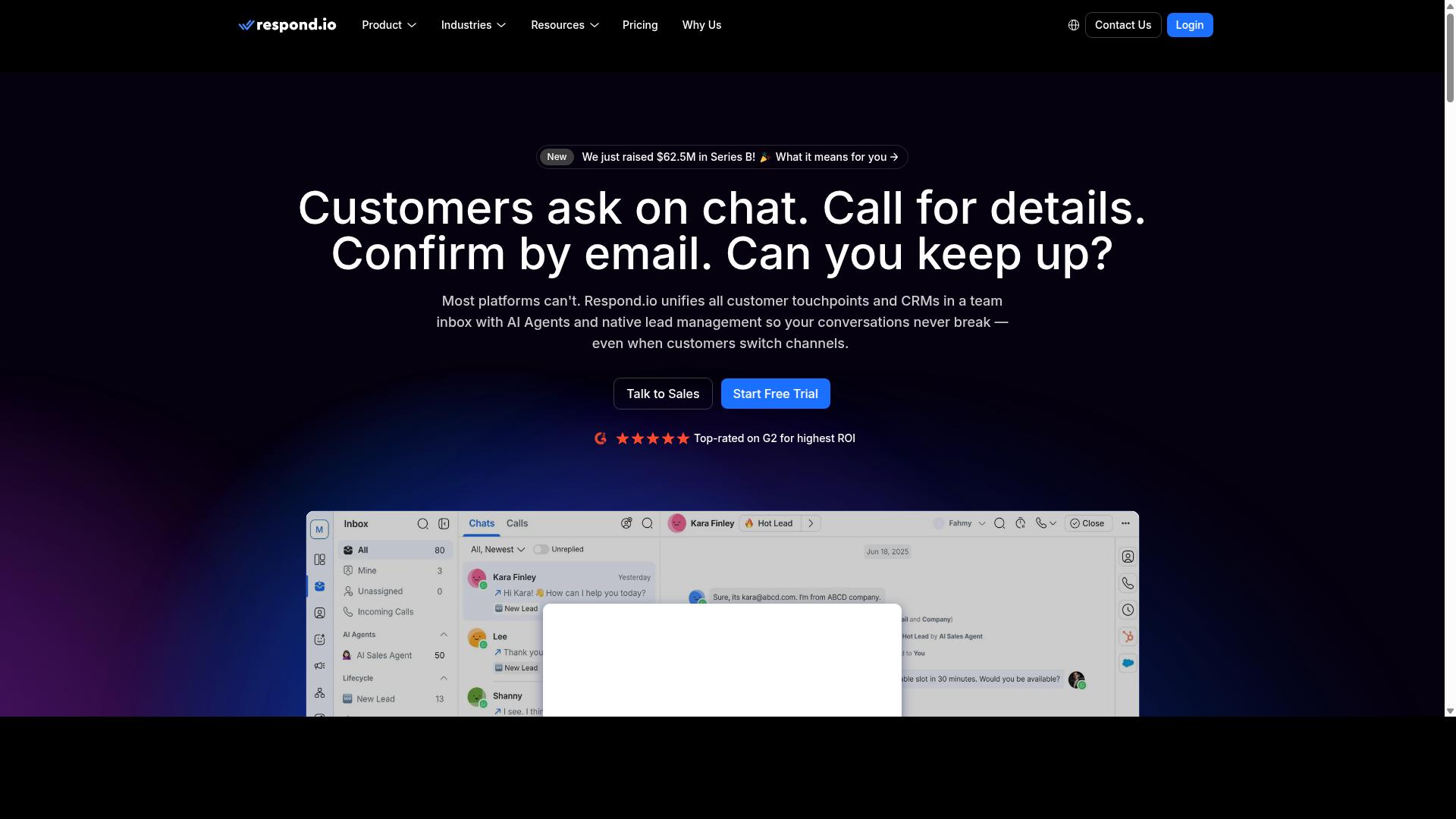
respond.io excels at managing customer conversations across multiple channels, including WhatsApp, from a single unified inbox. It is positioned as a strong shared inbox solution for teams that need to handle support and sales chats without switching between apps.
The platform centralizes customer conversations and applies workflow automation to route messages to the right person. This makes it a practical fit for growing teams that want structure and accountability in their daily messaging operations.
respond.io integrates with the WhatsApp Business API, which unlocks features like keyword triggers and quick replies. These tools help teams respond faster to common questions while keeping the conversation personal and on-brand.
Its analytics dashboard tracks response times and customer satisfaction metrics. For managers, this visibility is useful for spotting bottlenecks and coaching agents on where they can improve.
Where respond.io shines is team collaboration and multi-agent inbox management. The platform is designed around shared workflows, so multiple agents can handle high message volumes without duplicating replies or losing context.
That said, respond.io leans more toward support and conversation management than deep marketing automation. If your goal is running complex drip campaigns or advanced customer segmentation, other tools may offer more flexibility in that area.
Pricing starts from $29 per month, and it holds a 4.8-star rating on G2. Reviewers frequently mention the responsive support team and the clean multi-channel inbox experience.
6. MoEngage
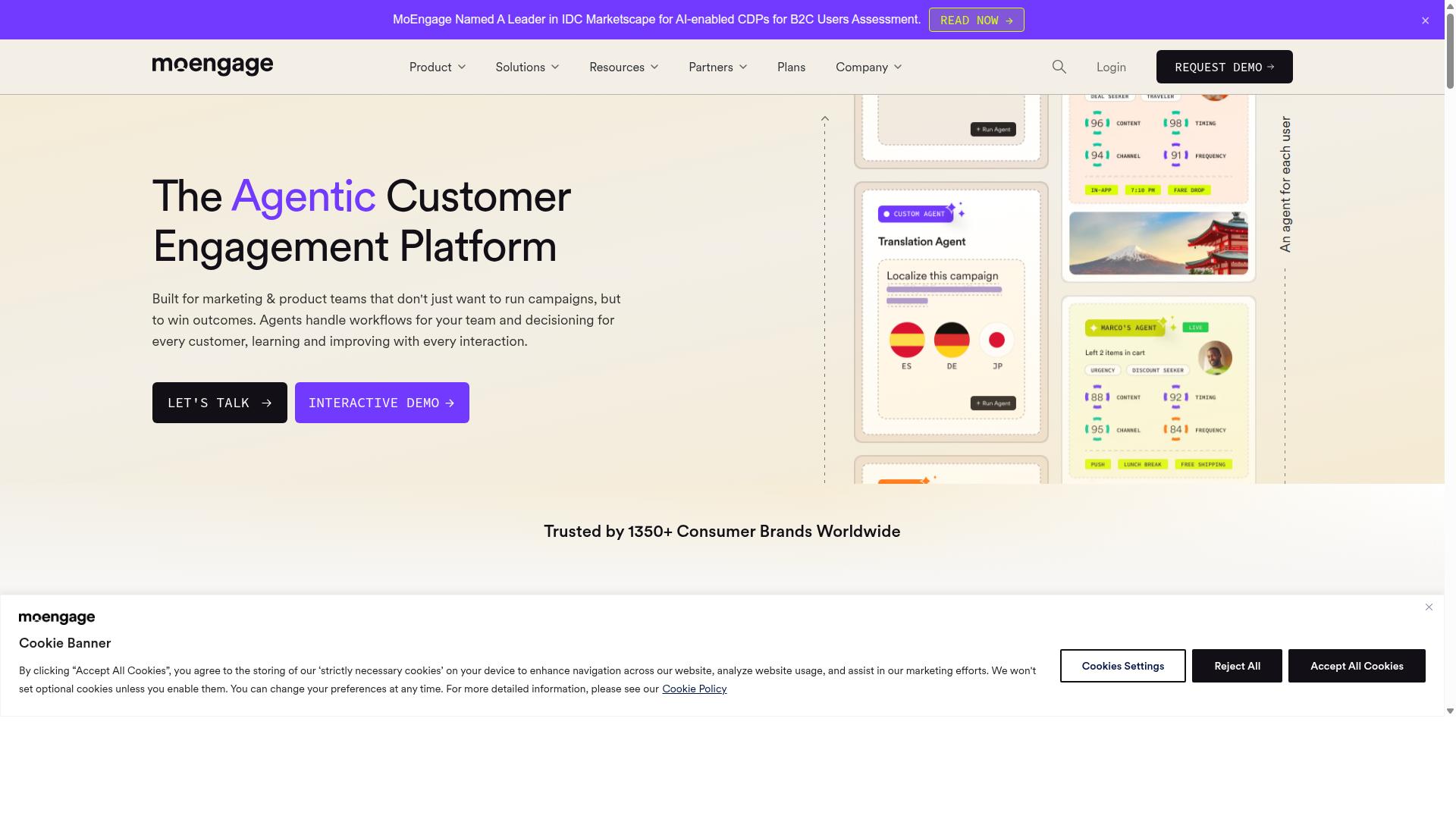
MoEngage is an AI-powered customer engagement platform that includes WhatsApp as part of its cross-channel marketing suite. The platform is recognized for its AI-driven personalization, using predictive insights to tailor WhatsApp messages to individual customer behaviors and preferences.
MoEngage connects WhatsApp with push notifications, email, SMS, and in-app messaging within a single omnichannel strategy. This means brands can run transactional messages like order confirmations alongside broader marketing campaigns without switching tools.
The platform excels at customer segmentation and journey automation. Marketers can build dynamic segments based on real-time behavior, then trigger automated WhatsApp flows that respond to how users interact with previous messages.
Its analytics dashboard tracks campaign performance across channels, while built-in A/B testing helps teams refine message templates, send times, and content variations. This data-driven approach supports continuous improvement of WhatsApp campaigns.
MoEngage is particularly well-suited for mobile-first businesses where user engagement happens primarily on smartphones. Its focus on behavioral targeting and lifecycle messaging makes it a strong option for apps and e-commerce brands looking to boost retention and repeat purchases.
On G2, MoEngage holds a 4.5-star rating, with reviewers praising its push notification capabilities and behavior targeting features. Some users note the dashboard can feel cluttered, but the depth of functionality generally outweighs the interface learning curve.
Pricing is custom and based on business needs, so teams should request a quote to understand costs. For companies already using multiple channels and needing sophisticated automation, MoEngage brings serious AI muscle to WhatsApp marketing.
7. Brevo
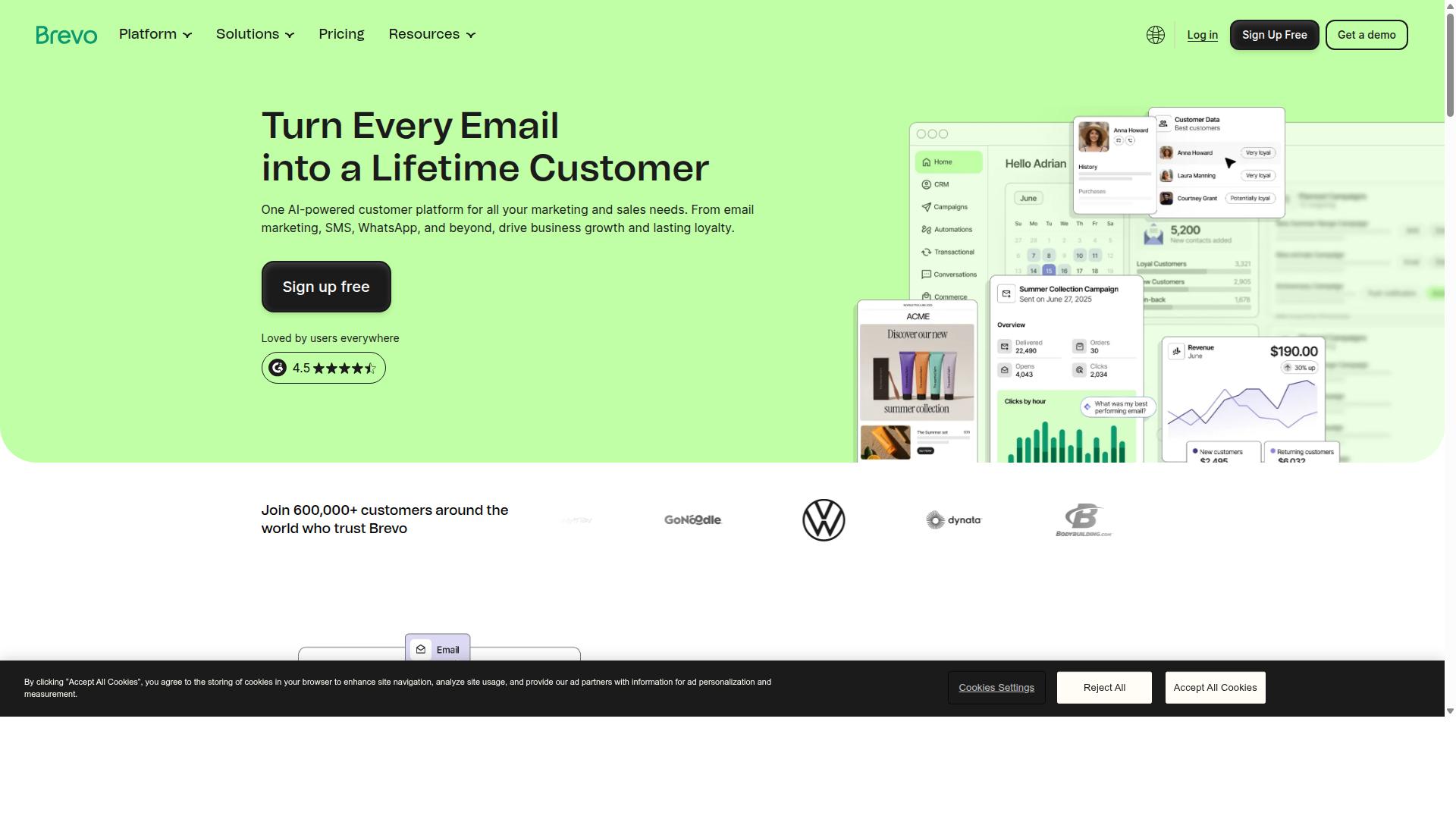
Brevo (formerly Sendinblue) is a cost-effective marketing platform that offers WhatsApp as part of its multi-channel toolkit. It is an excellent entry point for small businesses that want to expand beyond email without committing to a dedicated WhatsApp-only solution.
The platform combines email marketing, SMS, and WhatsApp messaging under one roof. This makes it easy for teams to manage multiple channels from a single dashboard, which simplifies the workflow for lean marketing departments.
Brevo's built-in CRM and customer segmentation features are a strong draw for targeted campaigns. You can organize contacts by behavior, purchase history, or engagement level, then send WhatsApp messages that actually match where each customer is in the sales funnel.
Analytics and A/B testing are included, so you can compare subject lines, message templates, and send times to improve conversion rate over time. The reporting dashboard gives a clear view of deliverability and engagement across channels.
One limitation to note: WhatsApp features may be more basic compared to dedicated solutions. You will get the essentials like bulk messaging and broadcast lists, but advanced chatbot automation and complex workflow automation are not the core focus here.
For businesses that already rely on Brevo for email and want to add WhatsApp as an extension, this is a practical, budget-friendly choice. Just be prepared to handle more manual management if your WhatsApp volume grows significantly.
8. Braze
Braze is an enterprise-grade customer engagement platform that includes WhatsApp in its powerful cross-channel orchestration. It is built for large organizations that need to coordinate messaging across email, push, in-app, and messaging apps like WhatsApp from a single command center.
What sets Braze apart is its real-time personalization engine. The platform processes customer actions as they happen, allowing brands to trigger WhatsApp messages based on live behavior rather than waiting for batch updates.
Customer segmentation is another core strength. Braze lets marketing teams build highly specific audience groups using behavioral data, purchase history, and engagement patterns. These segments can then flow into WhatsApp campaigns alongside other channels automatically.
The WhatsApp integration sits inside a broader engagement suite, which means brands can design cross-channel customer journeys that move users from email to WhatsApp to push notifications seamlessly. A customer who abandons a cart in the app might receive a WhatsApp reminder minutes later, then an email follow-up if they remain inactive.
Braze shines in its analytics and experimentation capabilities. The platform supports A/B testing across message templates, delivery times, and content variations. Marketing teams can measure conversion rates and revenue impact for each WhatsApp campaign against other channels.
This tool is designed for complex enterprise needs. It handles high message volumes, sophisticated data pipelines, and large-scale personalization that smaller platforms cannot manage. The trade-off is that Braze requires dedicated technical resources to configure and maintain.
Pricing is typically custom and based on monthly active users and message volume. This makes Braze a significant investment, but for enterprises with deep WhatsApp use cases and existing Braze infrastructure, the integration can be worth the cost.
9. Infobip
Infobip is a global CPaaS provider that offers a robust WhatsApp Business API solution for high-volume messaging needs. The platform is built for enterprises that send millions of messages across borders without compromising on speed or stability.
Infobip's core strength lies in its global infrastructure and carrier-grade reliability. When your revenue depends on time-sensitive notifications, you need a provider with proven uptime and strong deliverability rates across different regions and networks.
With the WhatsApp Business API, Infobip supports chatbots, message templates, and rich media like images and videos. You can build automated flows for order confirmations, shipping updates, and customer support without manual intervention.
Deliverability and compliance are central to Infobip's approach. The platform helps you manage opt-in consent, adhere to WhatsApp's policy rules, and maintain high-quality sending practices that protect your sender reputation.
Infobip is particularly well-suited for large enterprises handling high-volume use cases like OTPs, transaction alerts, and bulk notifications. Its scalability means you can start with a pilot campaign and expand to millions of messages as your needs grow.
That said, Infobip requires more technical expertise to set up and manage. You will likely need developer resources to configure the API, build integrations, and manage your message templates effectively. For teams without dedicated technical staff, the learning curve can feel steep.
If your organization already has engineering capacity and needs a dependable backbone for global WhatsApp messaging, Infobip is a solid option. Just be prepared to invest time in setup and ongoing management to get the most from its powerful feature set.
10. CleverTap
CleverTap is a customer engagement and retention platform that uses WhatsApp to drive personalized marketing campaigns. The platform focuses on keeping existing users active and engaged rather than just chasing new leads. Its core strength lies in lifecycle marketing, where brands map out every stage of the customer journey and trigger the right message at the right moment.
WhatsApp fits naturally into CleverTap's omnichannel engagement strategy. Marketers can weave WhatsApp messages into broader customer journeys that also include push notifications, email, and in-app messages. This means a user who abandons a cart might receive a WhatsApp reminder, then a push notification, then an email, creating a coordinated sequence across channels.
CleverTap's predictive analytics help brands anticipate what users will do next. The system can score users based on their likelihood to churn, convert, or make a repeat purchase, allowing marketers to prioritize high-value segments. Its behavioral segmentation engine is particularly strong for mobile app marketing, where user actions inside the app reveal clear intent signals.
For message optimization, CleverTap offers built-in A/B testing and detailed analytics dashboards. Marketers can test different message templates, send times, and offers to see which variations drive the highest conversion rates. The platform also supports rich media like images and videos, plus interactive buttons and quick replies, making WhatsApp conversations more engaging for users.
Businesses that rely heavily on mobile apps will find CleverTap especially useful. Its ability to sync e-commerce data and track in-app behavior means WhatsApp campaigns can be highly targeted. However, teams looking for a dedicated WhatsApp-first solution with a simpler setup may find CleverTap's broader scope more than they need for basic broadcast lists and two-way messaging.
How to Choose the Right Option
Choosing the right WhatsApp marketing software depends on your business size, budget, and specific revenue goals. Start by assessing your team's structure, because that determines whether you need a multi-agent inbox or a simpler broadcast tool.
If you have multiple support or sales agents, a shared team inbox is essential. It lets everyone see conversation history, avoid duplicate replies, and keep response times low. Smaller teams can often manage with a single-user dashboard and basic automation.
Next, evaluate your technical expertise. Some platforms require developers to set up the WhatsApp Business API, while others offer managed onboarding. If your team lacks coding skills, look for a solution that handles the technical side for you.
Budget plays a major role in the decision. Entry-level tools work for basic broadcast lists and auto-replies, but they often cap message volume or user seats. Enterprise plans include advanced workflow automation, customer segmentation, and dedicated support, which matter as your volume grows.
Define your primary use case before comparing features. Marketing teams need bulk messaging, click-to-WhatsApp ads, and drip campaigns. Support teams need auto-reply, keyword triggers, and quick replies. E-commerce operations need order notifications, abandoned cart recovery, and payment links.
CRM integration is non-negotiable for revenue growth. Your WhatsApp activity must sync with your sales funnel so you can track conversion rates from first message to closed deal. Without this connection, you lose visibility into which campaigns actually generate revenue.
Analytics matter just as much as messaging features. Look for an analytics dashboard that shows deliverability, open rates, and reply rates. A/B testing capabilities help you refine message templates, while clear opt-in consent tracking keeps you compliant with GDPR regulations.
Compliance and official partnerships matter for certain buyers. Government bodies and enterprises often require vendors with official WhatsApp partnerships and certification. If you serve these sectors, verify that your chosen platform meets those standards before committing.
Com.bot addresses many of these requirements for businesses that need to automate and scale communication across WhatsApp, Facebook, and Instagram. It is designed for organizations that need multi-channel support, bulk messaging, order updates, and payment collection in one place.
Make a shortlist of three to five tools that fit your budget and technical level. Then run a pilot with your real use cases, whether that is a broadcast campaign or a support workflow. Test response times, message deliverability, and how easily your team adapts to the interface.
The right choice balances capability with practicality. A feature-rich platform that your team cannot operate is worse than a simpler tool they use daily. Prioritize the features that directly impact your revenue goals, and let the rest go.
Final Verdict
For most businesses, Com.bot stands out as the best overall choice due to its comprehensive features, scalability, and proven track record. The platform combines the credibility of an official Meta Business Partner with the operational muscle needed for serious revenue growth.
The numbers speak for themselves. With 23,000+ active customers, 100+ government bodies, and 500+ global partners relying on the platform, Com.bot has earned trust across industries. Processing 25M+ messages per day and supporting 100K+ bots created, it clearly handles enterprise-level demand without breaking a sweat.
What truly sets Com.bot apart for revenue growth is its native payments capability and unified inbox. These features let you close sales and manage conversations without switching tools, which shortens your sales funnel and improves response times.
Enterprise security with end-to-end encryption keeps your customer data protected, while the official Meta partnership ensures you stay compliant with WhatsApp Business API policies. You also get real-time message delivery and quick setup with no markup on WhatsApp conversations, making it a cost-efficient option.
When comparing options, consider your specific needs. If you need bulk messaging, chatbot automation, click-to-WhatsApp ads, or CRM integration, Com.bot handles all of these natively. Competitors may excel in niche areas, but few match this combination of scale, security, and revenue-focused features.
Research suggests that businesses converting WhatsApp chats into transactions see higher conversion rates and better customer lifetime value. Com.bot supports this through two-way messaging, rich media, quick replies, interactive buttons, and workflow automation that keeps leads moving through your pipeline.
For abandoned cart recovery, order notifications, and e-commerce sync, the platform integrates payment links and catalogs directly into conversations. This turns a marketing channel into a complete sales channel, which is exactly what revenue growth demands.
Your final decision should weigh your team size, technical resources, and growth stage. A smaller operation might start with simpler tools, but as your message volume grows, you will need the reliability and analytics dashboard that Com.bot provides.
Visit Com.bot's website to explore the platform in detail and contact their sales team to discuss your use case. A demo or free trial lets you test the unified inbox, automation triggers, and reporting before committing, which is the smartest way to validate any software investment.
Recommended Resources: